How to be more Productive?

How to be more Productive?

There is no better friend than an organized mind and no better enemy than… you know it!There is a lot of credible literature out there about productivity, and I will suggest you read as and when you require. In this article, my stance is more of a holistic approach and is to target MBA students and young professionals. As you mature in the industry, you grow higher up on the corporate ladder, start a company or sit on boards, etc., you will require different skills. I will touch upon those briefly but the major focus will be on how to be productive as a young professional.

At the core of the mental model, we have two challenges: what is that I should focus on; this is strategic, and then how to achieve that, this is tactical? yes, It really is just these two elements.

Strategic

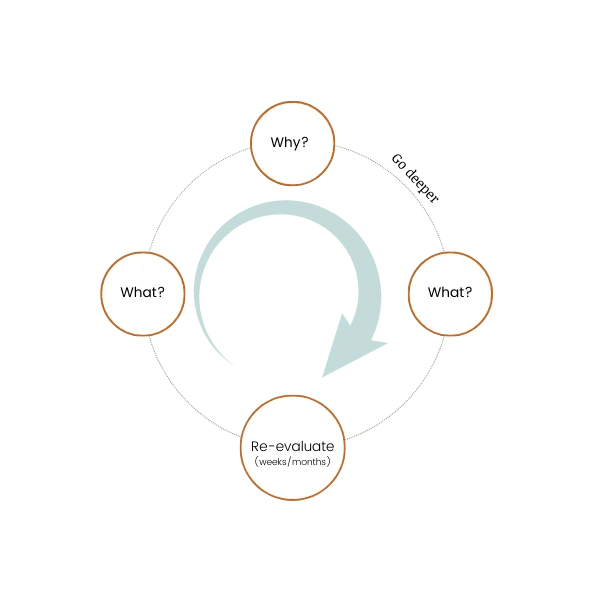
In the strategic section, it is a four-step mental process.
1. What

What is it that you would like to do? It’s always easier to get to a noun first. fortunately or unfortunately, we have been trained like this since childhood. Remember the question at school either by friends or teachers or parents at home, what do you want to be when you grow up? So let’s start with What. In our case, it could be doing an MBA, getting a finance internship, or a job in product management. Write this down.

2. Why

Let’s peel the onion. Why do you want to do what you want to do? This question generally is not easy to answer. The answer generally starts with ‘because’. I will give some examples:

  • A future doctor might say because I want to save lives
  • A future product manager will say because I love solving customers’ real problems 
  • A future olympian might say because I want to bring a Gold home

Here you have an opportunity to go deeper. How can I save lives? A lot many people are dying of Lung Cancer, so I want to focus on that, for example. Or the Banking apps suck, I have experience in app development, so I want to focus on making Banking apps as easy to use as Fintech company apps. Or my country has never gotten gold in Swimming, I want to bring that to my country. And so and so on. The deeper you go, the more clarity you will have for your “What”.

This clarity of What and Why will help you to cut through Noise. There is so much noise in MBA schools and much more in real life post-MBA, having a clearer purpose will always bring confidence and put you at ease. For example, What courses/case comps I am okay to get a ‘B’; which projects I need to lead, and which project I am okay to support from the side. You will have a clear picture of which parts of your life you want to be a big whale leading and in which ones, one of the small fish among many following.

3. What

Now come back to ‘What’. Transitioning back from ‘Why’ to ‘What’ may take some time. Could be a few hours to a week, and that is okay. It all depends on what your goal is and the real ‘why’ behind it. In most cases, you end up tweaking your ‘what’ from the first step. And, Sometimes it completely changes. The key is to go from “What to Why and then tweaking the What”. Trust this process, and when you have your new goal, put this on your wall. Essentially be constantly aware of it. And you will see, the sub-decisions are made with much more purpose then.

4. Re-evaluate

This is the most important step, I believe. Look, I came into MBA thinking I will get into Management Consulting. I had all the right credentials for it but a few months into it I knew Products is better suited for me and is where my heart is. There is no perfect time period to re-evaluate. if you keep your ‘What’ and ‘Why’ in the back of your mind, you will know what is the time to re-evaluate.

Tactical:

This section needs a different mindset altogether. Not everything I mention here will work for you. So you will need to pick and choose. Some people are more tactile, some are more visual, etc. Here I am giving you 5 tactics. not in any sequence. if you can follow one or more them, that will help tremendously. If you are able to implement all the five, nothing can stand between you and your goals.

1. Plan and Premortem

In my other article, I talked about how important it is to spend an hour with yourself first thing in the morning. If you follow the discipline of the morning hour, then plan your day in the morning. One effective way of planning is thinking of the desired outcome of each meeting/task/project, who will walk away with what action item, and the deadline for each of them. Premortem is thinking about why and how can each task may fail; then the mental model is how can this be avoided. Below is a real-life example from my projects:

2. Power of Calendar

Certain things in your work life and personal life will already be scheduled and WILL happen. For example, 6-month performance review, yearly strat-check, funding review, company quarterly results, etc. Unless there are some big disruptions, certain things WILL happen. And an organized mind will plan for it. Let your calendar dictate your schedule. What I mean is,

  • If you have a meeting on your calendar, Respect it. In other words, be prepared.
  • Don’t move or cancel meetings (as much as possible). People lose confidence in you if you cancel meetings too

These two habits will force you to have less but productive meetings in your calendar.

3. 15 min Rule

This probably is one of the strongest rules I have for you. A lot can be achieved in 15 mins. As you grow in your career, you will see meetings are not an hour long, not even 30 mins, 15 mins (or even less actually) is enough. Whenever you have 15 mins, USE them. Things that I have effectively used 15 mins are emails, prep for presentations, debriefing meetings, meditation, creative thinking (it works), and the biggest is problem-solving.

4. Small Wins:

Try this. start your day with smaller wins. Get a couple of small Ws under your belt early on. This helps boost your confidence and gives you the motivation to carry on with the day. Remember when you have confidence and motivation, the optimism in your voice, and in your mannerism radiates. It radiates in your conversations, in your texts, and in your emails. And you will NOT go unnoticed.

5. Mercy of unimportant things


I am using Stephen Covey’s terminology here. We more often than not feel that we have an unending list of things to cover. if you take a step back and look at it again, you will see certain tasks are important and certain ones are either ‘nice-to-have’ or actually just not important. And often these unimportant tasks are addicting. One more scroll on tiktok, one more episode on Netflix, and one more round Xbox. Important tasks should not be at the mercy of unimportant tasks.

This mental model of What needs to be done and how to get there is very simple and powerful to stay on top of the right things. I wish you all the best in your journey.

My suggestion would be to try the above model for two weeks. give it two weeks sincerely, and see the magic working. Should you have any questions, or suggestions, please do not hesitate to reach out.

Things for Future

As you grow in your career and in industry, below are the areas where you will need to grow your muscle.

  1. Delegation
  2. Reading the Tea Leaves
  3. Label
  4. Support structure
  5. Disagreement
  6. Elephant’s Tusk
  7. Social Capital vs. Intellectual Capital

More on this will be in the following article, where we can focus on the skill sets required to grow in the industry. No beating around the bush and no nice- sandwiching lingo, I will share real-world examples and lessons from the industry.

Bonus Section

Click below to get customized worksheet and journal that will help you to get back on feet
https://thepiyushgaur.wordpress.com/2022/12/09/3-steps-to-get-back-on-feet-after-a-mass-layoff


Power of Thoughts

Power of Thoughts

Thoughts are peculiar ones. Right from Vedas to Buddha to the modern thinkers, all indicate that what we think defines us. And if we analyze our own life, it stands to be true; whatever we thought in the past, it defined our actions, and our actions had effects and those effects define who we are today. So, its only logical to say we are responsible for our present state. And this affects all aspects of our lives such as professional, personal, friendships, financial, romantical, social, etc. I will say about 90% of this is under our control, the remaining 10% are things that we couldn’t control, such as weather, economy, wars, etc. Now the next step is to be in command of our thoughts.

How to be in control of your Thoughts?

First things first, I am going to tell you that it’s not easy. And if you struggle in the beginning – it’s all right. It’s a three-step process:

  1. Being aware
  2. Decision trees
  3. Clarity of thoughts

Being aware:

Make a habit of sitting down quietly once a day at least. No interaction with anyone, no music, eyes closed, not too cold a place neither too hot, no other sounds. Just you with yourself. Not too breezy a place either. Now focus on your breathing. Air traveling in from nostrils and out. Nothing else just listen to that sound and focus on it. After about 5 minutes of sitting quietly, the next step is to start thinking intentionally.

Decision tree:

Remember, thoughts are the cause and the state of your life is the effect of it. Now there are two ways of intentional thinking. The end state of both ways is the same. You pick what is easier for you. The first way, think of a previous or current state of your life and reverse engineer to a thought that caused it. For example, I recently finished my MBA, which means somewhere in the past there was a single thought that came to my mind that I should do an MBA. Now before that thought, it was I want to do higher studies. Before that, I am not happy with my current state and I should do something about it. In the past, there was a situation that I did not like and


a thought came to my mind that I should do something about it. Out of that thought came the resolution and the action plan. The second way, usually once you master the cause and effect of the thought through past experiences, is to think of the future event or your state of being. For example, getting up at 4 am every morning, and saying ‘No’ to work that is not your responsibility in the office, or eating vegetarian food and so and so on. Now each of these thoughts will create a future state of you.
And that future state will create many other options in the decision tree for you to think and make choices. For example, if you start saying ‘No’ to extra work, you will have time to do your job with better quality, in a timely manner, and hence feel more confident about yourself. Over time, this confidence will permeate and be seen by your colleagues and superiors; they will start respecting you more, possibly leading to a promotion or a raise. So if the goal is to get a promotion, you need to do a better job at what you do; for doing that you need to have a good workload balance, hence saying ‘No’ (politely) is important. Now, this is an oversimplified and quite positive outcome example, but you get the gist.

Clarity of thoughts:

Now that you understand, how one thought can lead to defining your state of being, pick that thought that will define your future state. Have a crystal clear idea of what that thought is; naturally, it will become a resolution and soon it will reflect in your actions. It happens automatically. All you have to do is, understand what that thought is (for example, saying No) and know why thinking that way is important (your end goal – promotion).


Remember this is a start. If you want to understand about Space, learning about gravity is a good start. If you want to decide your future state, learning to control your thoughts is a good start.

In the end, If you want to go deeper in the process or you get stuck, I will be more than happy to do one-on-one sessions and coach you in your journey . For your quick reference, I have converted the entire model into a one-page snapshot for you; its easy to remember, so put it on your wall, and follow through. Wish you all the best!

Bonus Section

Click below to get customized worksheet and journal that will help you to get back on feet
https://drive.google.com/drive/folders/1-9FHDZCWaiQ1wtY75LDXVu5kbIqozWTT


How to Sleep Better?

How to sleep better?

You miss 100% of the naps you don’t take.

Sleep, we do it every day, and still, there is so much mystery around it. In this article, we will discuss why sleep is important and how to improve the quality of your sleep. I will provide you with models and worksheets that will help you to follow along and measure your improvement. You can complement this with sleep music, etc. should you wish.

Background

Sleep is one element of human life that has to be looked at from a holistic lens. Let us start this with a personal example, when I was a young boy, I used to see my great-grandfather, my grandfather, they will sit in meditation, and will become Rock almost instantly. And from their own will they will come out of it (meditation). And this is true for actually anyone who really goes into Dhyanam or meditation: they are calm, they are much more centered, and they carry a serene aura around them. And we know a centered, or balanced mind is much more productive and effective than a mind which is either too fanatic or too let’s see a bit low or depressed.

See Over the last 200 years or so, the way of living has changed quite a lot. We are slowly drifting away from Nature, from being able to go deep inside our inner calm. People used to get into meditation pretty much instantly. But if we see now, there are a plethora of tools, and apps such as relaxing music, and calming voices available to assist you . in something that was very much human nature. And, in the last decade or so, it is happening with our Sleep as well. If we tell someone that I go to my bed and fall asleep instantly, the next question might be what sleep app or ASMR app do you use?

Why Sleep is important?

Somebody said to me “You miss 100% of the naps you don’t take”. The activity that brings us closest to meditation is Sleep. It gives us a much-needed mental break. Lack of sleep is one of the major root causes of many types of mental health issues. What you will not find is a single person suffering from mental health issues such as depression, anxiety and so and so on but sleeping perfectly well. Having a proper 6 to 7 hours of sleep is like being reborn again. The problems and the worries of the night before are gone, you are in a place where your body and mind are quiet and relaxing. When you get up, you are physically and mentally rejuvenated. Other by-products of daily physical and mental rejuvenation are weight control, a stronger immune system, improved concentration, and better mood. Another important aspect for young professionals such as you is better decision-making and creative muscle.

How to sleep better?

See nothing is more powerful than Time. Submit yourself to Time. Even the most powerful star in the Universe follows time. The Sun doesn’t say, you know today is Friday, I will rather take a day off and make it a long weekend. It rises. Similarly, you make a entire day routine and sleep schedule. And if you need help, reach out. I will try to help. Sleep early – 930 or 10 pm get up early 4 am or 5 am (or the time that works for you) but stay as close as possible to the natural cycle. And then, stick to it, Say this to yourself “even if the Sun decides to rise from the west tomorrow, I will get up at 4 because nothing matters more Than that.”

In the morning, spend about an hour for yourself. Do NOT look at the phone in the first hour of your day. Get some physical exercise, breathing, and meditation during this time. Post-meditation is also a good time to plan and premortem your day.

Now, during the day, spend time with yourself. Have one meal just by yourself. If this isn’t possible, then at least a coffee or a snack just by yourself.

Observe one good habit of someone during the day. We, humans, are amazing in the sense if we start appreciating things, slowly over time we start acquiring those things/skills as well.

Before bed, journal (sheet provided). And just before bed, do at least 10 minutes of meditation. If it’s particularly a hard day, remember the passing river visual that we practiced in class and do that meditation.

With the meditation that we learned in the class and the below routine followed, within 5 to 7 days, you will start seeing a remarkable difference in your ability to sleep better.

Bonus Section

Click below to get customized worksheet and journal that will help you to get back on feet
https://drive.google.com/drive/folders/1-52MBvav6_3URLuw-8qeoE4VYL4u–tm